
Category: materials
The Unique Challenges of Medical Component Design and Manufacturing
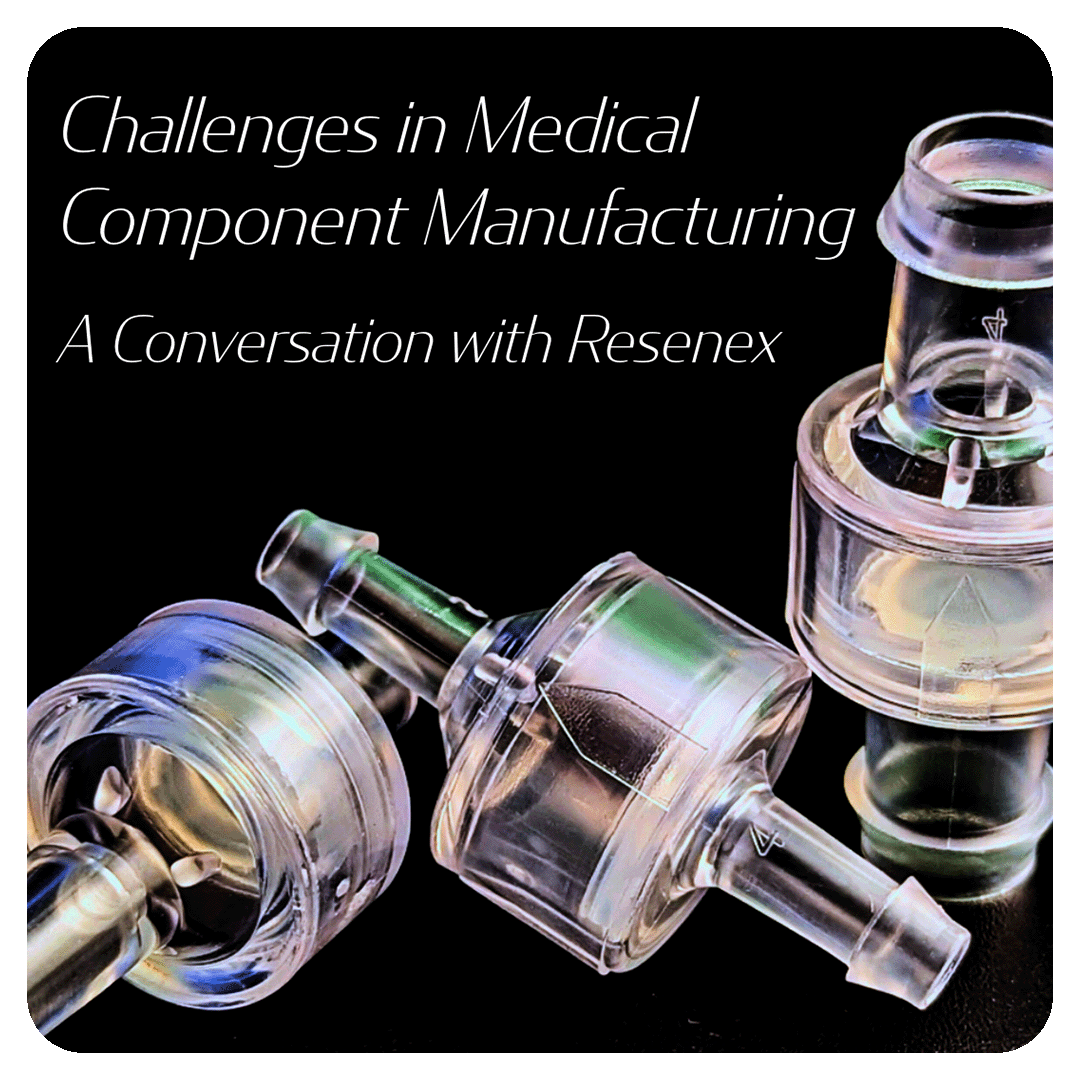
Materials Product Spotlights January 7, 2026Medical component manufacturing sits at the intersection of precision engineering, material science, strict regulatory oversight, and a commitment to the unique needs of the medical and biomedical industries. Even familiar fluidic components like check valves, filters, and fittings need to be specially tailored and subject to tighter tolerances when the end user stakes are so high.
Silicone Rubber Sheet Bonding: What You Need to Know
Materials Packaging Product Spotlights September 5, 2025As an engineer in the packaging industry, you know that modern heat seal packaging machinery needs the right combination of time, temperature, and pressure to create reliable seals with low scrap rates. You also know that such machinery tends to run fast and hot with little tolerance for downtime.

Porous Bronze FAQ, Sintering & Applications, Part 3
Inline FiltersMaterials May 22, 2021Porous sintered bronze elements faq, applications beyond filtration plus references
An FAQ section about sintering, porous sintered bronze fuel filter elements and depth filters
Fine particles suspended in a fluid passing through a depth filter may impact or run into the filter material and stick or adhere to it. This particle impact and capture is called adsorption.
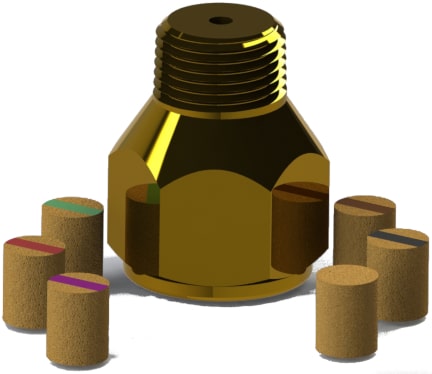
Depth filters have complex, meandering and irregular interconnecting pores ...
How Porous Bronze Filters are Made & How They Work, Part 2
Inline FiltersMaterials May 21, 2021About depth filtration and the porous filter elements used in fuel filters
Some Details About Bronze, Depth Filtration, Porous Bronze Filter Elements and How to Make Them
What is Bronze?
Traditionally, bronze is an alloy of copper and tin. Tin bronze is still the most common bronze alloy, and it usually has about 10 to 12% tin with copper making up most of the balance. Quite a few modern bronzes do not contain any tin at all.
Porous Bronze Inline Fuel Filters for Small Engines, Part 1
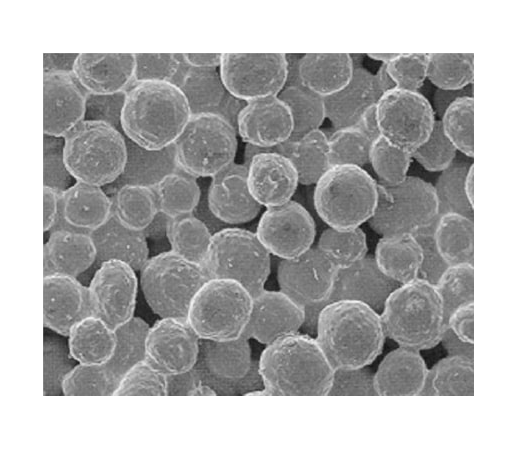
Inline FiltersMaterials May 21, 2021Benefits of porous sintered bronze filter elements and how they are made
Light duty carbureted vehicles, Outdoor Power Equipment (OPE) and Powersports are heavy users of plastic inline fuel filters. Inline fuel filters are easy and fast to replace and provide filtration protection from debris, fine particles and other contaminants.
These fuel filters are also widely marketed as OE original equipment parts and ...

Plastics Shortage Hits Plastic Parts Supply Chain
Materials Miscellaneous April 1, 2021Plastics Shortage Hits Plastic Parts Supply Chain
Raw Material Shortages Plus High Demand Disrupts Production
Manufacturers using prime and engineering grade plastics face ongoing shortages, price increases and ...

Plastic Fuel Filter Body Materials
Inline FiltersMaterials February 8, 2021Quality plastic fuel filter housings should be durable, heat resistant and compatible with gasoline-ethanol blends
OE and OEM aftermarket small engine plastic inline fuel filters
Small plastic inline fuel filters provide small or carbureted internal combustion (IC) engines with additional protection from ...

What is Durometer? – Elastomer and Plastic Hardness
Materials Miscellaneous February 18, 2020Durometer affects what type of materials and fittings you use for your application
What is durometer?
Durometer or Shore durometer is a standardized way to measure the hardness of materials like rubber (elastomers) and plastics. Durometer measurement scales range from 0 to 100 but there is no such thing as a durometer unit of measurement. Another way of saying this is that durometer is a dimensionless ...

What is Acetal Plastic? — POM Plastics for Flow Control Parts
Materials September 9, 2019Why Acetal or POM plastic might be the best material choice
What is Acetal Plastic?
Acetal plastic also called polyacetal and polyoxymethylene (POM), is a general-purpose, semi-crystalline, engineered thermoplastic. Acetal is commonly used for parts that need to be very stiff, have low surface friction, and have good dimensional stability. Dimensional stability is the ability of a plastic part to maintain its ...

About Stainless Steel Materials – The Why and The How
Materials March 6, 2019Why use stainless steel valves?
Stainless steel is a common material option for miniature flow control valves.
One reason for this is that stainless steels, like other metals, tend to be heavier but also stronger and tougher than plastics. Stainless steel materials, in particular, also have great corrosion resistance.
This blend of corrosion resistance and toughness is a ...

What is Kynar® Plastic? — PVDF Plastics for Flow Control Parts
Materials December 11, 2018What is Kynar® Plastic?
Kynar® is Arkema's trade name for their PVDF plastic. PVDF or polyvinylidene difluoride plastic is a tough, stable, very non-reactive thermoplastic.
PVDF is a useful engineered plastic because it has important advantages over other plastics: strength, durability, abrasion resistance, low permeability, recyclable and ...

Stainless Steel Materials for Miniature Flow Control Valves
Check ValvesMaterials Miniature Valves November 29, 2018Why stainless steel?
Stainless steel is a steel and so it is typically very strong. This gives it great pressure and temperature resistance. It is also a tougher, more durable metal than cast iron, ductile iron, brass or copper.
Stainless steels get their name from the fact that they are very corrosion resistant. This plus toughness and strength make them a preferred ...

Extruded, Forged or Cold-Drawn Brasses for Miniature Valves
Materials Miniature Valves June 20, 2018A look at the brasses used to make miniature ball and check valve bodies
Brass miniature valves are useful, reliable and economical
Wrought brasses, alloys of copper and zinc, are frequently used as the body material for metal mini check valves and ball valves. A major reason for this is brass performs well at temperatures ranging from about -325 to 425 °F (-198 to 218°C).
Equally important, the brass alloys used to make valve bodies can be quickly and accurately shaped using automated machining techniques. The result is that ...

Miniature Ball Valves: Plastic, Brass or Stainless Steel?
Materials Miniature Valves May 4, 2018Some guidelines for selecting the right material for your application
This is the first in a new series of ISM blog posts about miniature valves and ball valves in particular.
Why use a ball valve?
Ball valves are durable, reliable and securely shut off flow even after sitting idle for long periods of time. Because of this, they are frequently used as fluid and gas flow cut-off valves. Ball valves are also easy to operate. This plus their availability in a range of useful material options has led to ...

FDA Compliant, Food Grade and Food Safe
Materials March 28, 2018What are food contact substances and what’s their relationship to FDA compliance?
What does FDA compliant mean?
FDA compliant is a shorthand way of talking about materials that are safe for direct food contact. These materials are also called food contact substances (FCS).
An FCS is any material that comes into contact with or is used for manufacturing, packing, packaging, transporting or holding food. Both the plastics and the pigments used in making colored plastic fittings and cooking utensils are examples of ...

Elastomers Chemical Compatibility Chart, a New Resource
Materials December 8, 2016The new ISM Elastomers Chemical Compatibility Chart is now available as a downloadable PDF
Introduction
Product development and routine maintenance require choosing and sourcing parts. Knowing the right questions to ask helps ensure the correct part is ordered. Our new Elastomers Chemical Compatibility Chart is another in a series of ISM technical resources that help make component selection faster and ...

Elastomers and Rubbers - Is There a Difference?
Materials December 5, 2016Elastomers and rubbers are handy because of their unique material properties
Rubber and elastomer are words commonly used to mean any material with rubber-like properties. Elastomer is shorthand for elastic polymer. Elastomers are viscoelastic: sticky, very elastic polymers (plastics). Natural rubber is an elastomer made from latex, a milky tree sap. Synthetic elastomers are made from petroleum. Rubber is frequently used to indicate elastomers that must be vulcanized or cured to be useful ...

Medical Chemical Compatibility Chart, an ISM Resource
Materials July 25, 2016Get a copy of the new IS Med Specialties Medical Chemical Compatibility Chart
Introduction
There are choices to make when developing a prototype or sourcing parts for a project. Knowing the right questions to ask ensures the correct part is ordered. Chemical compatibility is especially important for medical flow control components. Our new Medical Chemical Compatibility Chart can help ...