
5 Challenges Modified Fittings Can Solve
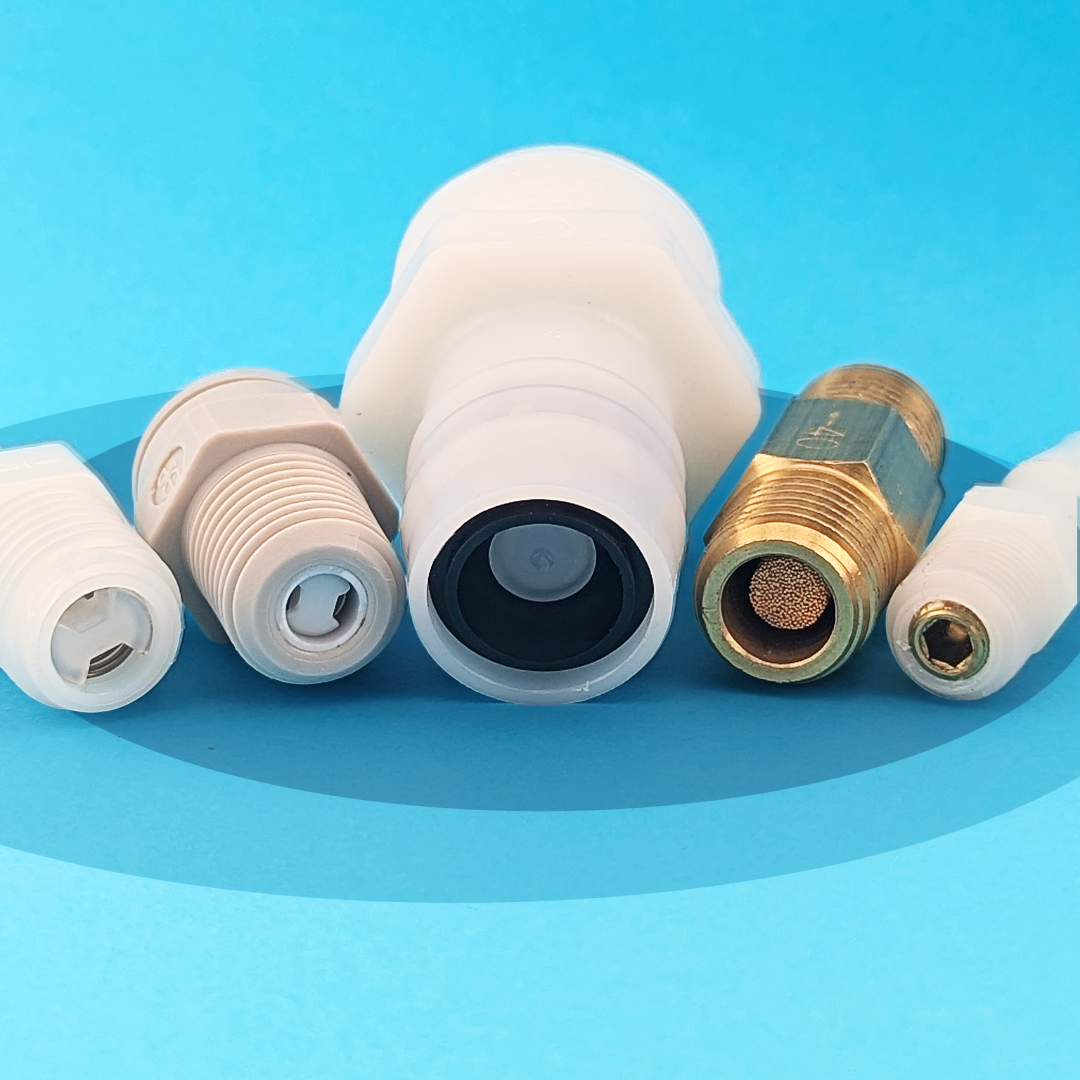
The right fit for a fluidic system is not a luxury reserved for major manufacturers, nor is it a concern to be taken lightly. Whether you’re a large OEM trying to churn out high volumes of product with tight tolerances or a small operation with fewer material needs but even less space in which to meet them, the simple truth is that you might not find the right parts “off the rack” so to speak. What’s more, if you do find parts that work well enough, you could be missing out on major cost savings, improved efficiency, and reduced operational risks without even realizing it. So, while this article is chock full of specific examples, these illustrative scenarios are intended to speak to all of you, big or small, OEM or otherwise.
1. System Bulk: Weight and Wear
Let’s begin with a busy bottling facility. A robotic arm swings back and forth over a conveyor belt, the end of which has a pneumatic gripper for lifting bottles and placing them into packaging trays. It does so hundreds of times an hour, shift after shift.
The Challenge
This arm is part of a fast-paced automated system. It therefore needs to move not only quickly, but also fluidly. This is challenging for a heavy piece of machinery on a deadline. Additionally, this arm will require maintenance given the constant strain this motion puts on its components. The more involved and frequent the maintenance, the more potential for costly downtime.
Why not just keep the components to a minimum so there’s less to maintain, and the arm itself is lighter and more dexterous? These arms need a lot of components. Filters keep contaminants out of the pneumatic system. Check valves prevent damaging backflow. Flow restricting orifices and relief valves help control pressure levels. And this all says nothing of the tubing, actuators, and other components required to turn air pressure into robotic function.
The Solution
You decide to take a single push-to-connect fitting and insert both a check valve cartridge and a filter cartridge. You still have your backflow and contamination prevention in place, but simpler and lighter than before. Modified fittings allow you to adjust one component such that it does more than one job. This very straight-forward way of reducing system bulk without sacrificing system needs can help you lighten machinery that needs to move freely, reduce the footprint of flow control systems in tighter spaces, and generally simplify your maintenance needs.
2. System Complexity: Too Many Failure Points
A busy hospital pharmacy has to keep up with particularly high and sometimes very specific medication demands. In doing so, it uses a specialized machine for helping to compound medication by combining the exact right levels of active ingredients in the creation of a specific medication type and dosage.
The Challenge
Accuracy is paramount for patient safety and can only be accomplished through meticulous design and flawless execution. The machine itself requires check valves and filters for all the same reasons as the aforementioned pneumatic grippers. It also needs a tubing network that connects the different active ingredients without combining them prematurely. These types of machines may also require other specialized components, like needle valves calibrated for highly precise fluid measurements.
All of this is to say that the machine allows no room for error while simultaneously being necessarily complex. And when we say, “no room for error,” we’re not talking about lost efficiency or costly delays; we’re talking about life threatening inaccuracies in patient medications. So how can you reduce your risks of failure or even small inaccuracies without removing any critical functionality?
The Solution
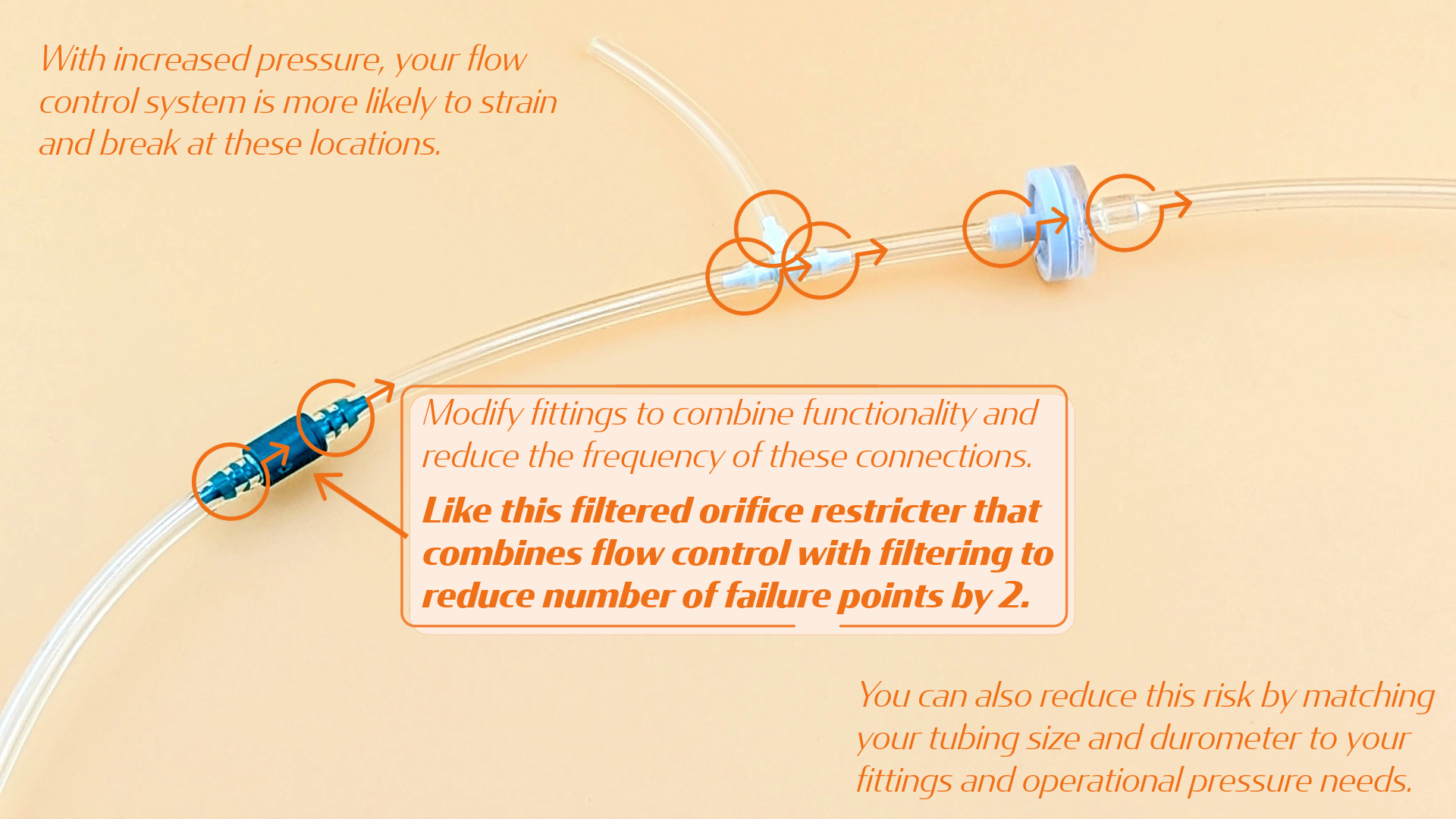
Honestly, you’d address this the same way you lightened the load on your pneumatic grippers. But in this case, we’re focused on how combining functions into one part reduces the number of failure points in a fluidic system. Every joint in your system where tubing connects to a fitting or fittings connect to each other, you are introducing the potential for error. Fittings become loose and leak. You lose pressure and, by extension, precision. Combining fittings reduces the number of these points.
3. System Compatibility: Material and Environmental Concerns
Now let’s picture ourselves in a car manufacturing plant. We’re testing fluid lines, subjecting them to extreme temperature cycling. However, the fluid lines aren’t the only things being “tested” so to speak. Our testing equipment must be able to hold up to the same environmental extremes to function properly.
The Challenge
It all comes back to those pesky failure points. Temperature cycling is also pressure cycling in a way. Components expand and contract with heat. We need fittings that are flexible enough not to crack under pressure but firm enough not to melt or erode under the heat. And we’ve been trying everything.
Our initial brass fittings worked for a while, but repeated temperature cycling led to cracking over time. So then we tried plastics, starting with Teflon, which also worked for a while until the fittings started warping under pressure. Lucky for us, there are lots of material options out there, and we found Kynar to be the most reliable one.
The only problem is, while it fits the material needs of our system, it literally doesn’t fit the existing equipment. The only Kynar parts we could find either had connector ends too large for the existing system or they were the wrong orientation (straight when we needed elbow, for example). What is an automotive company to do?
The Solution
Find what we can in the appropriate material and piece it all together to make a part that fits. In this case, we’re not dropping check valve or filter cartridges into a fitting but attaching fittings together such that we can have our desired shape and make it fit at the same time.
4. System Delicacy: Precise Flow and Pressure Needs
Moving along to a packaging plant, let’s examine the equipment used in applying flexible film to various products. The film is fed from a roll into a machine that wraps it snuggly around items coming down a conveyor belt. The machine isn’t just applying the film; it’s stretching and holding it to create exactly the right amount of tension. Picture thin plastic being pulled from a film roll through silicon rollers that keep it taught.
The Challenge
These rollers are managed through pneumatic tension control, where actuators transfer the pressure from compressed air onto the rollers to control the level of tension applied to the film. Precision is the name of the game here. Too much tension tears the film. Too little tension leads to poorly wrapped products. Inconsistent tension can also cause problems with machinery. So how do you ensure you can apply enough force without going overboard?
Enter precision orifices, also called flow restrictors. These tiny components act as choke points for compressed air (or other fluids). It gives you a little grace on one end by cutting down the pressure to a predictable degree on the other. You can buy them right out of a catalog if the ones you find fit your needs. However, when we are talking about things being “precise” there’s a chance you won’t find the exact orifice size required, at least not one that also meets all the other connection and material needs for the application.
The Solution
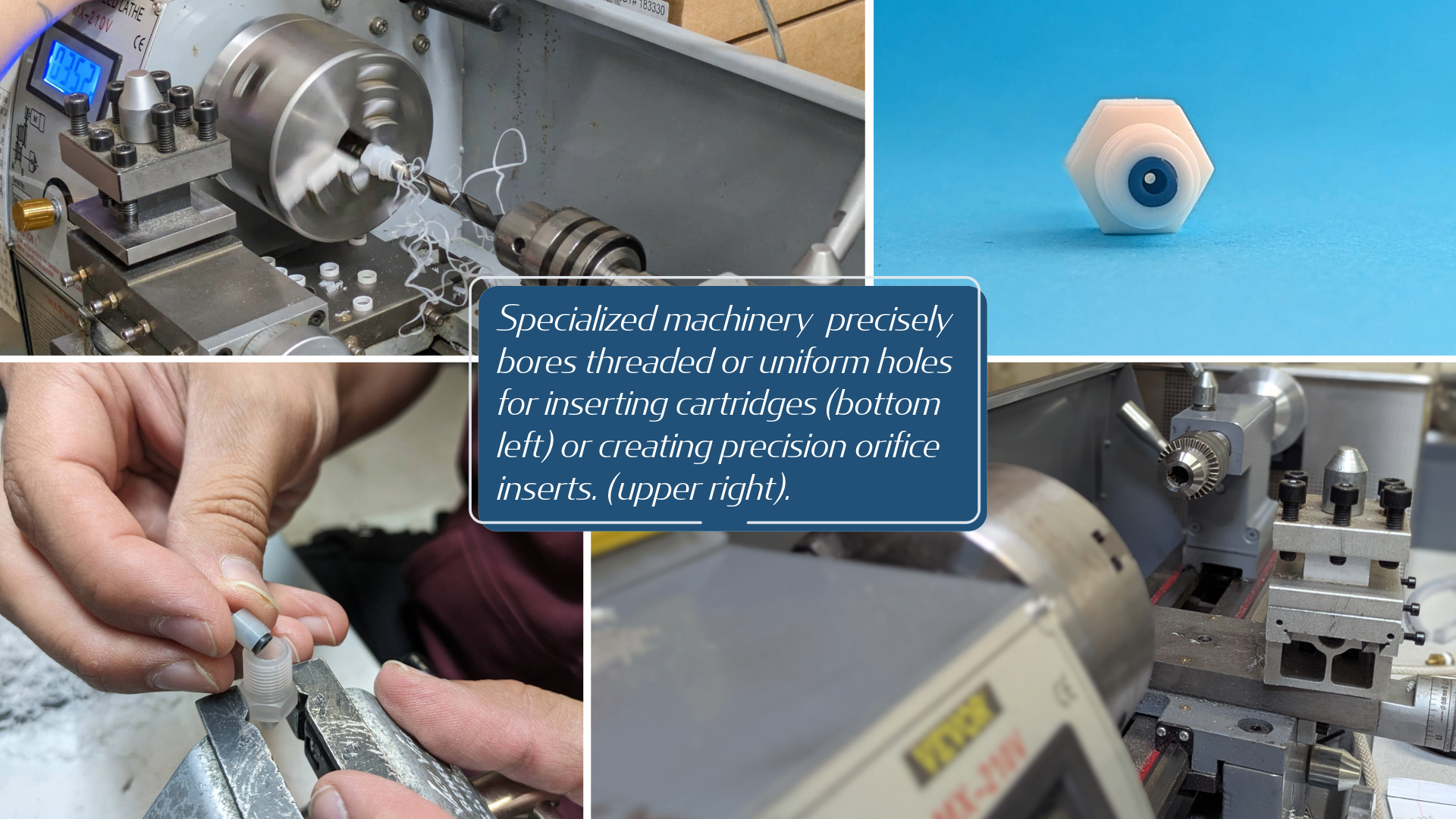
Fitting modifications sometimes take the form of orifice insertion. In other words, you take a fitting that otherwise works with your tubing or other system connection needs but is too large to effectively toggle the pressure. Then you make it smaller by drilling a precisely measured hole into a piece of plastic that you then insert into the fitting. Now provided you are administering enough overall pressure, then pressure fluctuations on one side come out at a consistent and carefully calibrated rate on the other.
5. System Development: Mismatch Components and Lead Time
An OEM is upgrading their production line to include new tooling that must be integrated with the existing machinery. The window for getting it all going is narrow if they want to avoid costly delays. And if it were as simple as attaching the tooling to the machinery, then that wouldn’t be too big of a concern.
The Challenge
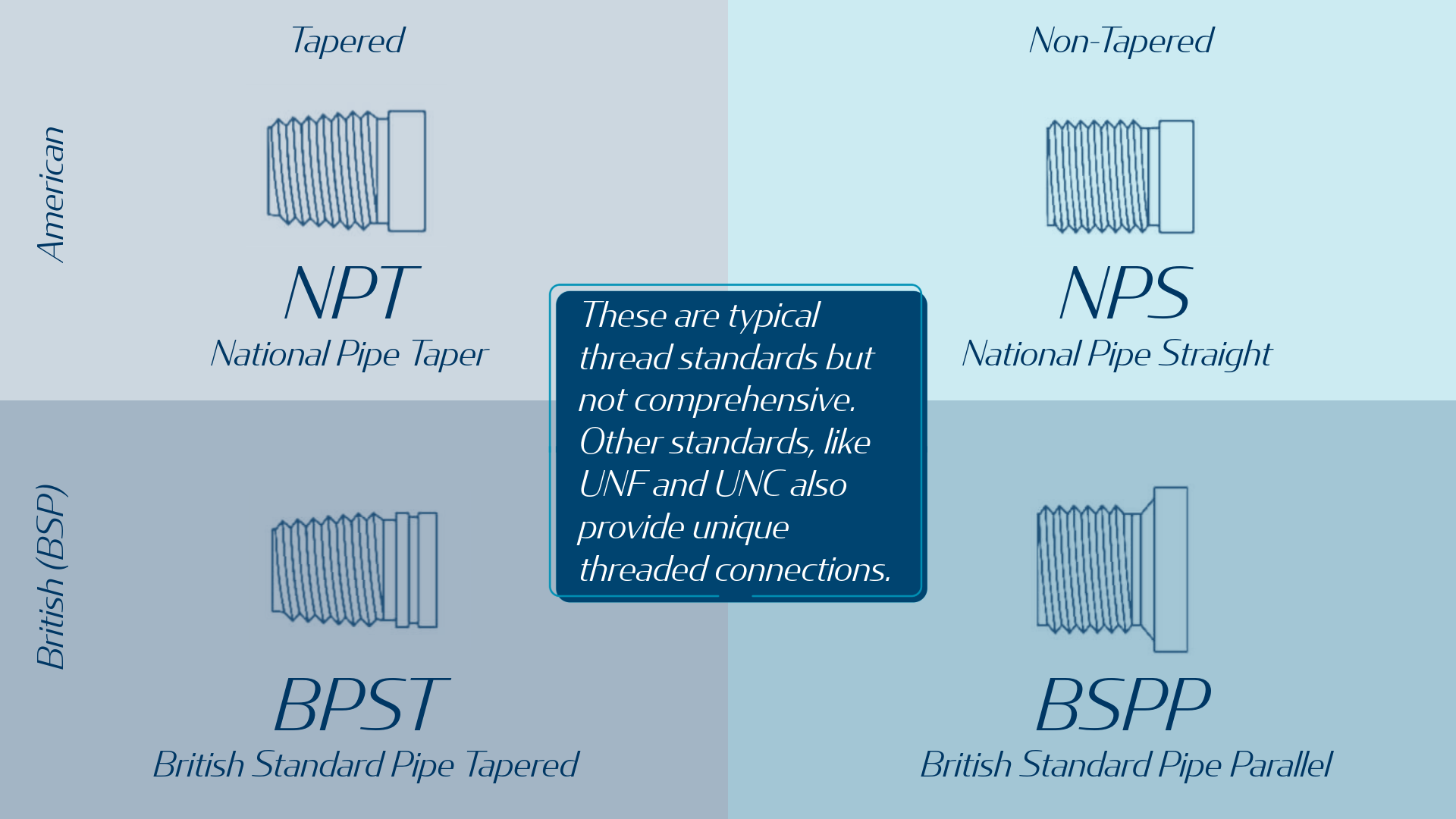
The connection point uses tapered pipe threaded connections on both sides. However, the threads themselves do not align. The original machinery uses British Standard Pipe Taper (BSPT) threads, and the newer tooling uses National Pipe Taper (NPT) threads. While they may look similar at first, these two threading types utilize slightly different angles for their threads, making it impossible for them to safely connect.
You have a few different options here, but only one that adapts to your need to keep production online as much as possible. First, you can rework the new tooling to match the older machinery, but this means going back to manufacturing. You could also look to replace your old machinery to bring it in line with your new tooling, but that’s costly and takes time. Finally, you can use a threaded adapter to adapt the new tooling’s fitting to that of the older machinery.
The Solution
Understandably, you go with the threaded adapter. It’s affordable and easy. It’s also the fastest option given the adaptations are already available to you, and nothing needs to go back to the drawing board (or blueprint as it were). You use an NPT to BSPT adapter on the tooling, and the rest is history.
Getting Started with the Right Fit
Now here’s the rub: making your own fitting modifications can be a little challenging if you’re not familiar with the process (and depending on the modification in question). You need to have or find the right parts to put together. You need to make sure your cartridge or orifice inserts fit exactly right. You may even need specialized equipment, like a drill, for making orifices to begin with. Suddenly, modified fittings sound like a mammoth task all on their own, right?
The good news is you don’t have to do any of that. You don’t even have to know exactly what combination would best suit your needs. All you need is to find a supplier that offers modified fittings as a value-added service, including helping to design them, test them, and construct them. As one such supplier, ISM will also help you source the components involved, so if we don’t have the right part for the modified fitting you need, we’ll work to source one. And since we work with low and high volumes of components, we can help you no matter which of the above scenarios you most identify with.
Tell us about your needs, and we’ll take it from there.

Take Advantage of Our Expertise
We offer a line of ideas, so if you don't see it - ask for it. Let us turn your ideas for pneumatic or fluidic circuitry assemblies into reality — from conception to finished product.