
4 Important Considerations for Choosing Small Medical Filters
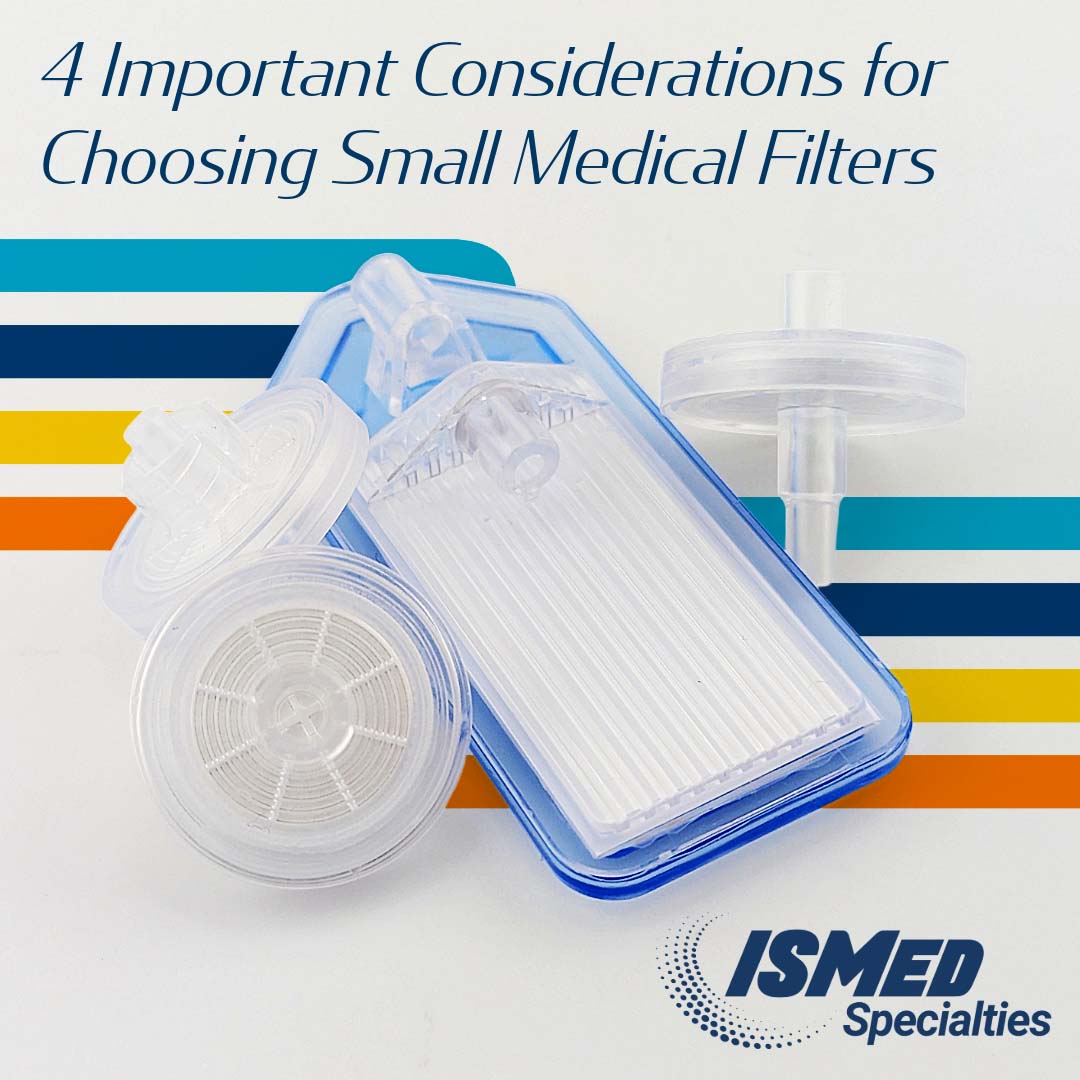
When it comes to medical and laboratory settings, a filter is never just a filter. To that end, what type of small inline medical filters you use will be heavily use case dependent. After all, you’re never going to hook a syringe filter into your IV or affix an IV filter to the end of your syringe. However, even within these highly specific filter types, there are seemingly minute but ultimately impactful variations, and those considerations are mostly universal across filter types.
So, what choices do you have when selecting a medical filter, and why do they matter?
Types of Small Medical Filters
As a distributor of small parts for various pneumatic and fluidic purposes, including medical, we’re focusing not on large filters like those you might find in an HVAC system, but small inline filters, like those more at home in a fluid line for dialysis. Here’s a quick overview before we dive into important considerations.
Syringe Filters
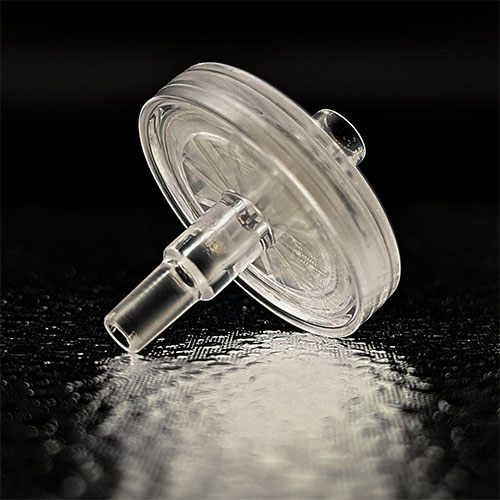
Syringe filters look like little tops that you might spin on a table, with fittings on either end and a central circular disc. The disc contains a membrane through which fluid is forced by a syringe plunger. This membrane is the filter part, specifically designed to keep certain substances out. Syringe filters can be one-way or bi-directional, keeping harmful particles or other impurities from being either drawn into the syringe or injected into a patient. As with the other filter types in this list, they are single use, ensuring their efficacy and protecting patients, equipment, and biological samples.
IV Filters
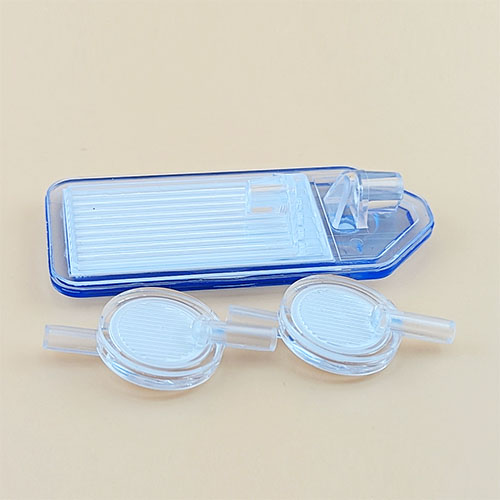
These inline filters connect tubing at some point in an IV line. They too have a flat housing for the filter piece, but this time the plane is parallel to the tubing, filtering the fluid lengthwise. This shape allows them to incorporate cleanly into the IV line without getting in the way and without sacrificing the filter’s efficacy.
IV filters are not an essential component of IVs, frequently only used in situations where they are deemed necessary. In these cases, the intention is to remove contaminants from fluids, like bacteria, lipids, and undissolved drug particles, prior to those fluids being administered to a patient. Additionally, some IV filters, known as vented IV filters, keep oxygen from being administered to patients, preventing deadly air embolisms.
Gas Filters
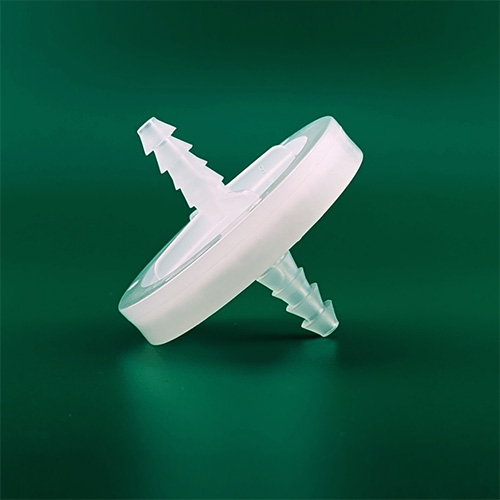
Gas filters could realistically refer to a range of possible filter types. In this case, we’re referring to small inline filters intended for air and other gas filtration affixed to medical equipment like respirators or machines that deliver anesthetic gases. These filters remove impurities from gases, making them fit for patient use or use within certain medical devices.
All of these filters share certain commonalities, like a housing, also called casing, membrane filter, and fittings. Therefore, similar factors play into determining which of each type is best for a given scenario.
1. Pore Size
A medical filter membrane contains several pores through which the fluid or gas can pass. As with your kitchen strainer, these pores prevent substances larger than them from passing through. The smaller the pore, the smaller the substances the membrane is able to filter out.
Unlike your kitchen strainer, medical filter membranes operate on a much smaller scale, such that they can filter out substances invisible to the naked eye. The pores on these membranes are measured in microns, which themselves are 1/1000th of a millimeter (mm). To put that in perspective, human hair is about 50–70 microns in diameter. E. Coli, one such substance you might want to filter out, is about 2 microns long and a half a micron wide. Long story short, while medical filter membranes might appear nearly indistinguishable where pore size is concerned, they are anything but, especially the smaller they get.
Pore size recommendations by general use case:
- Microplasma filtration – 0.1 microns
- Gas filtration – 0.2 microns
- Sterile filtration (aka bacterial removal) – 0.22 microns
- Clarification (aka general filtration) – 0.45 microns
- Pre-filtration (aka filtering out larger particles) – greater than 0.45 microns
This all begs the question, why not just go with the smallest pore size and cover all your bases? The counterbalance to filtering out microscopic particles is the fact that fluid and gas that you do want flowing through the membrane will have a harder time doing so. Low or inconsistent flow rates can have dangerous ramifications where certain applications, like administering medicine, are concerned. Lower pressure, in many situations, is ideal.
No matter the type of medical filter you choose, you must choose a pore size well suited to that use case and targeting the specific types of substances you want to isolate.
A Note About Mesh
When discussing membrane measurements for medical filters, you’ll hear micron and mesh used side by side, but these are not interchangeable terms. The micron refers to the size of the pore. The mesh refers to the number of those pores per linear inch in the membrane. With that said, you won’t be choosing your membrane medical filter one based on mesh size. Membrane pores are not evenly spaced such that they could be measured in this way. There are other types of filters used in medical applications, typically larger than those discussed here, that feature woven filters for which mesh is an accurate measurement of filtration size.
2. Diameter
Medical filter listings will typically lead with the membrane internal diameter (ID) rather than the diameters for the inlet and outlet. So that 13mm medical filter you’ve been eyeing has a membrane that’s 13mm in diameter. The outer diameter (OD) if mentioned at all, would refer to the plastic housing around the membrane. Some components also provide additional information about the inlet and outlet connection measurements. Frequently you’ll just see the fitting style listed, like a slip luer or luer lug. Hose barb fittings will include a measurement of the diameter to a fraction of an inch.
Membrane diameter is particularly important across filter types due to its relationship to fluid volumes. Syringe filters, for example, must consider the volume of fluid in the syringe.
- 13 mm syringe filters are recommended for less than 10 ml of liquid
- 25 mm syringe filters are recommended for 10–100 ml of liquid
- 32 mm syringe filters are recommended for 100–250 ml of liquid
IV filters are more concerned with flow rate. When it comes to drug administration, for example, via IV, it’s important that patients get a steady and uninterrupted flow of medicine. If the filter is too small for the required flow rate, it may get clogged and/or the administration will be slowed. If it’s too large, the fluid may pass through too quickly. Fluid type also influences flow rate and should be considered. This can be affected by the membrane diameter but is more likely influenced by pore size and fitting diameters. For both inline IV filters and inline medical gas filters, large membrane diameters equate to higher flow rates.
3. Material
Material considerations are two-fold: both filter membrane and housing. Each must be considered separately and weighed against your use case and other needs.
Membrane Material
Medical-grade filter membranes come in a variety of materials, including nylon, polyester, acrylic copolymer (aka Versapor), PTFE (aka Teflon), glass fiber, and more. These materials can be hydrophobic, meaning they repel water, or hydrophilic, meaning they can be wetted by water, allowing it to pass through. Generally, medical filter membrane materials are inherently hydrophobic or hydrophilic. PTFE, for example, is a hydrophobic substance. However, there are some materials, like Versapor, that can be either, depending on the specific type used.

When it comes to medical filter membranes, you want hydrophilic filters in cases where liquids need to pass through the membrane, as in the case of administering certain types of drugs. Hydrophobic filters are more commonly used for medical gas filters to prevent liquids from passing through. If you need a hydrophilic filter but only have access to hydrophobic ones, you can pre-wet the filter using a low surface tension substance like isopropanol.
Next, consider the chemical compatibility of these plastics with whatever substance will be passing through the filter. Some medicines can be corrosive to the plastics used in the filter membrane. Alternatively, some plastics can leach into the fluid passing through the membrane, reducing the efficacy of the medication in question.
Housing Material
Medical-grade filter housings also come in a range of plastics, including acrylic, polycarbonate, and polypropylene of various colors. Polypropylene in particular is a low cost and highly durable option with good chemical resistance. Polycarbonate is less chemically resistant, but still a trustworthy option for general lab usage. Acrylic is favored for visual clarity, particularly for syringe filters.
Just as with your membrane material, you’ll want to consider chemical compatibility when selecting the right filter housing, as it will be coming into contact with the same substances. Beyond that, you should think about visual clarity, flexibility versus rigidity, and operation temperatures.
Finally, you’ll need to factor sterilization methods into your material choices for both your filter membranes and your housings. We’ll cover that one in more detail.
4. Sterilization
Different medical use cases require different degrees of sterility, which can be achieved in a variety of ways. However, not every membrane or casing material can hold up to every sterilization method. Consider what level of sterilization you need (informed by your use case) and what methods for achieving it you have available to you.
Quick overview of common methods:
- Autoclave (Steam Sterilization) — Pressurized steam is highly effective but not well-suited to certain heat sensitive plastics. This method may sometimes be used for reusable filters, which tend to be more durable.
- Dry Heat Sterilization — This method uses high temperatures minus the moisture and is great for heat resistant but moisture sensitive materials. Filters sterilized in this way are more often larger, industrial filters used in things like pharmaceutical processing and manufacturing.
- Ozone Sterilization — This gas-based sterilization method works well for heat-sensitive materials. It is a newer form of sterilization and still being studied for its potential in disinfecting medical components like filters.
- Gamma Irradiation Sterilization — Gamma rays that kill microbes are frequently used for single-use medical components, like inline filters. This method is incredibly effective but not fully tested in regard to its impact on the integrity of certain materials and may reduce filtration efficacy in some cases, which is one reason it’s not used for reusable components.
- Ethylene Oxide Sterilization — Another popular method for medical components, ethylene oxide gas is used for heat-sensitive plastics or electronics. Similar to gamma irradiation, ethylene oxide sterilization (EtO) is deeply penetrative with more thorough results.
Start by selecting the material that best suits your application and then choose a sterilization method appropriate for that material.
Your One Stop Shop
Making the right choices starts by asking the right questions. Outside of knowing whether you’re looking for a syringe filter, an IV filter, a gas filter, etc., ask yourself the following:
- What type of fluid is passing through this filter?
- What flow rate do I need to maintain?
- What level of filtration do I need (aka what am I filtering out)?
- What environmental/operating temperatures will this filter be subject to?
- What sterilization methods do I have at my disposal?
The answers to these questions will inform your membrane diameter, micron size, and material, as well as the housing material and fitting types and sizes. And your needs are unlikely to stop at just one specific filter. As the use cases within your medical or laboratory setting vary, so too will your filter needs.
That’s where distributors like ISMed Specialties come in. We offer a range of filter options, including varying combinations of pores, materials, diameters, and membranes. And if you can’t find the exact filter that suits your needs, just ask. We work with a wide network of trusted OEM suppliers, including ones that specialize in medical and laboratory components.
Browse our medical filters or reach out for a conversation about your component needs.

Take Advantage of Our Expertise
We offer a line of ideas, so if you don't see it - ask for it. Let us turn your ideas for pneumatic or fluidic circuitry assemblies into reality — from conception to finished product.