
Soft Dairy & Spoonable Foods Heat Seal Overview

Sealing this rigid packaging is more complex than one would thinkChoosing the right lidding and rigid container materials is not enough. You also need optimized tool design and control to get consistent, high-quality seals.
Spend any time in a grocery dairy section, and you see a tremendous variety of dairy products and variations offered for sale in plastic packaging.
Soft dairy and spoonable foods packaging are usually rigid or semi-rigid containers with heat sealed die-cut or lidding rolls. This packaging is reliable, attractive and convenient to use.
Find out more Heat Seal Lidding Materials for Soft Dairy and Spoonable Foods considers material choices for effective lidding sealing. Soft Dairy and Spoonable Foods Lidding Sealing Challenges examines the challenges to getting consistently better and safer lidding seals.
Typical rigid packaging for soft and spoonable foods:
- Cups
- Pots
- Trays
- Tubs
A wide range of foods use rigid packaging with peelable liddingSoft dairy and spoonable food products that use the same packaging lidding materials and methods:
- Butter
- Cheese dips and spreads
- Cottage cheese and sour cream
- Cream cheese and other soft cheeses
- Custards, desserts and puddings
Soft dairy sealed packaging comes with or without overcappingDepending on the tear and puncture resistance of the lidding, there may also be a snap-on lid or cap often referred to as overcapping. Overcaps make sense for larger tubs that contain multiple servings, but they also protect foil lidding from damage.
Snap-on overcaps have become less common for single-serve products because multi-layered foil, non-foil lidding, and especially multi-layer plastic films are significantly more tear and puncture resistant than simple foil lidding.

Shelf appeal and
brand reputation matter
Lidding and good lidding seals give consumers and manufacturers what they wantWhat customers want from single-serve soft dairy and spoonable food packaging
- High quality, fresh contents
- Convenient ease-of-use
What manufacturers want from single-serve soft dairy and spoonable food packaging
- Quality – food that smells and tastes good
- Safety – fresh food that is free of contaminants
- Product differentiation – products that are attractive and stand out on the shelf
Heat Seal Lidding MaterialsRigid packaging lidding consists of multi-layer, laminated materials. These layers can contain foil, paper, plastic and metalized plastic film layers.
The critical roles of soft dairy rigid packaging and its sealed lidding
Different layers of die-cut and rollstock film provide these essential functions:
- A surface for printed graphics
- A barrier to environmental exposure like water and oxygen
- A layer that heat seals the lidding to the rim of the cup or tub
Service conditions that need to be taken into account when choosing lidding:
- Chemical resistance to the food product
- Vacuum resistance during transport and processing
- Temperatures the filled containers will be exposed to
- Compliance with FDA requirements for food contact materials
Die-cut and rollstock rigid package liddingBoth die-cut pre-cut lids and lidding rolls begin as very long, very wide and very big continuous rolls. The lidding supplied for use by food processors as resized rolls is usually called roll stock or rollstock.
Both die-cut and rollstock lidding are designed to be heat sealed onto the rim of rigid or semi-rigid food containers.
These lidding materials must be relatively easy to open without shredding, especially for single-serve, ready-to-use foods like yogurt. At the same time, this lidding needs to provide a strong seal that is tight enough to protect the contents.
Standing out on the shelf and brand differentiation requires high-quality graphic design. Superior product packaging also maintains a soft dairy product's good taste and smell and is reliably safe, which also helps build and maintain brand reputation.
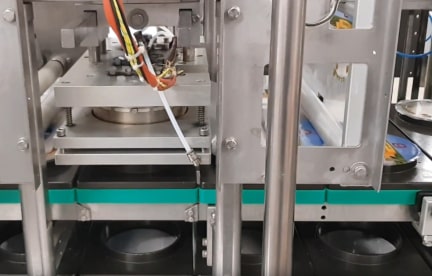
Heat sealing lidding film
How die-cut lidding and rollstock lidding packaging and processing machinery differThere are some significant differences between the handling of die-cut versus lidding film during processing.
- Die-cut lidding is supplied already cut to shape.
- Die-cut lidding sealing machinery picks and places the lidding onto the plastic containers before it is heat sealed.
- Continuous lidding film (rollstock) is sealed and cut away from the cups or tubs, and the trimmings are re-wound.
Peelable seals versus welded (weld or lock-tight seals) sealsOne of the most important factors in choosing lidding heat seal layers for their performance is the peel seal or peelability desired in the packaged product. Single-serve soft dairy packages often use a medium to strong peel strength.
Why is welding different from heat sealing lidding for peelability?
For a ready-to-serve or single-serve dairy product, if lidding shreds or tears instead of peeling, it is potentially messy and usually requires more force. Consumers strongly prefer peelable lidding seals for single-serve products because this provides quick and easy access to the food inside.
The Process of Heat Sealing Food PackagingHeat conduction sealing is the most common method used to seal food packaging. Controlling conduction-based sealing requires heat sources and temperature control sensors built into the bodies of tooling mounts. Conduction transmits the sealing heat to the sealing surfaces of the heat seal tools.
Pressure, dwell time and temperature controlEffective, safe and durable seals require careful control of these heat seal parameters at the seal tooling surfaces when lidding seals are created:
- Pressure
- Dwell time
- Temperature
Selecting and applying the correct heat seal parameters plays a critical role in making the resulting seals safe, leak-free and reliable. Higher packaging machinery line speeds and evolving material requirements increase the difficulty of getting these right.
Metal on metal tooling is the traditional method for forming a seal. Newer, metal bonded silicone tooling can compensate for packaging sealing surface variations, irregularities and contamination.
What makes a robust and durable package seal?
- Good hot tack strength
- Good mechanical strength
- Selecting and using the right seal initiation temperature and operating window
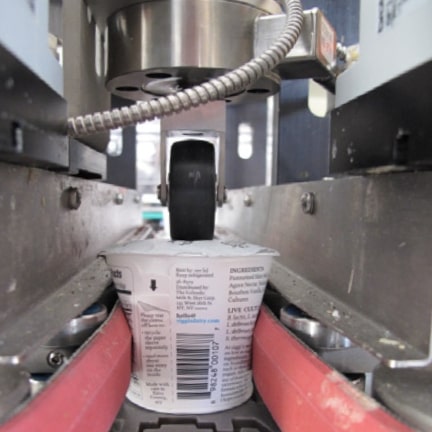
Leak testing a yogurt cup
Mechanical heat seal strengthWhat is mechanical heat seal strength?
For peelable lidding, heat seal strength may be described as mechanical peel strength. In general, seal strength must be within a range that protects the quality of the food inside. It must also be consistent. Consistent seal strength can indicate whether the food filling and sealing are controlled and reliably producing optimally sealed packages.
Find out more about United Silicone customized heat seal tooling and packaging solutions >>
Increased machinery speeds create heat seal challengesMost food processors select lidding for use in semi-automated or fully automated food processing lines.
Fully automated processing and packaging lines have become faster to improve cost efficiency. One consequence of these higher processing speeds is that optimized dwell time, temperatures and pressures required to seal lidding have become even more critical.
Long-term management of soft dairy processing and packaging lines requires fine-tuning, refreshing and optimizing the design of heat seal tooling. Partnering with a tooling supplier with the engineering capabilities and experience to develop and deploy the best tooling solutions ensures good product seals.
Line speed and sealing parametersChoosing the speed of an automated food processing line is based on the need to meet particular production targets or the production volume of a product made in the plant. Either way, higher production rates minimize the costs of production.
The goal of designers and operators is to meet line speed requirements by matching packaging material choices with heat sealing tooling design. These choices work together with good machinery setup, monitoring and maintenance.
Machinery design can have a significant impact on providing sufficient dwell times at higher line speeds. Generally, outside of managing heat seal tooling temperatures, an essential point to keep in mind regarding dwell time is that adjustments and fine-tuning become even more critical.
Why product line changeovers matter for heat sealing dwell times and temperatures
Modern, highly automated soft dairy production machinery is a significant capital investment.
With packaging processes, a changeover is a switch in machine tooling, lidding and rigid containers. It accommodates different packaging sizes and the foods being processed. An excellent example of this is a tooling changeover from one cup size to another.
A changeover usually requires stopping the machinery, cleaning it up and switching out tooling as needed. It includes making adjustments to control settings plus starting the whole line up again.
For this reason, designers have moved to more flexible machinery designed to handle changeovers more quickly and more efficiently.
United Silicone
Product Overview
Summing it all upProcessing soft dairy or spoonable foods requires choosing the right lidding and rigid container. In addition, food safety and quality require sturdy, protective seals between the lidding and the cup rims.
All of this comes together during the heat seal process. Optimizing tool design and sealing parameters provide consistent seals. The results are lower, predictable production costs and minimal scrap while maintaining desired production line speeds.
Selected Reference Resources
- ASTM F2824 - 10(2020), Standard Test Method for Mechanical Seal Strength Testing for Round Cups and Bowl Containers with Flexible Peelable Lids >>
- Definitions to measure packaging line productivity at Packaging World >>
- Does Your Lidding Film Meet Consumer Preferences? at Bostik >>
- FDA Compliant, Food Grade and Food Safe at ISM, Industrial Specialties Manufacturing >>
- How to solve the dairy packaging puzzle at Dairy Foods >>
- Manufacturing Yogurt and Fermented Milks 2nd ed., Fermented Dairy Packaging Materials - Aaron L. Brody (chapter 7) at Google Books >>
- Sealing Technology: The Overlooked Backbone of a Successful Production Line at Food Manufacturing >>
- Testing the Integrity of Package Seals at IFT, Institute of Food Technologists >>
Our blog post series about heat sealing packaging for soft dairy and spoonable foods
- Soft Dairy and Spoonable Foods Heat Seal Overview >>
Learn what it takes to package ready-to-eat soft dairy and spoonable foods in plastic cups with secure, attractive and easily peelable lidding. Rigid plastic containers with heat-sealed flexible lidding require thoughtful design and optimized processing.
- Heat Seal Lidding Materials for Soft Dairy and Spoonable Foods >>
Find out about the material decisions behind peelable soft dairy lidding. Fresh foods in rigid packaging need to be protected yet easy to access. Get a better understanding of how different lidding layers work together to protect the food inside.
- Soft Dairy and Spoonable Foods Lidding Sealing Challenges >>
Get consistently better and safer lidding seals by knowing more about the challenges. The best outcomes start with optimized tooling and sealing control.
Take Advantage of Our Expertise
We offer a line of ideas, so if you don't see it - ask for it. Let us turn your ideas for pneumatic or fluidic circuitry assemblies into reality — from conception to finished product.