
Heat Seal Lidding Materials for Soft Dairy & Spoonable Foods
Multi-layered heat sealed lidding for rigid food containers

Optimized tool designs and careful control of conduction-based direct contact constant heat sealing are not enough. Lidding materials, especially the heat seal layer, must be appropriate for the container and the food inside.
Find out more Soft Dairy and Spoonable Foods Heat Seal Overview looks at what it takes to package ready-to-eat soft dairy and spoonable foods in plastic cups. Soft Dairy and Spoonable Foods Lidding Sealing Challenges examines the challenges to getting consistently better and safer lidding seals.
The right lidding material choices keep ready-to-use food safe and tasty
Rigid packaging lidding requires multiple laminated or coated layers. Each of these layers has a specific purpose. These layers consist of foil, paper, plastic or metalized plastic.
Soft dairy and spoonable food lidding must be relatively easy to open without shredding, especially for single-serve, ready-to-use foods like yogurt. In addition to being peelable, this lidding needs to provide a protective barrier and a strong seal that is tight enough to prevent leaks.
The critical roles of soft dairy rigid packaging and its sealed lidding
The simplest die-cut and rollstock lidding must provide these three essential functions:
- A surface for printed graphics
- A barrier to environmental exposure like water and oxygen
- A layer that heat seals the lidding to the rim of the cup or tub
Lidding Film Basics
The most basic type of lidding for ready-to-use soft dairy and spoonable foods has these layers:
- An outer substrate (backing) printable layer or one bonded to another printable layer above it
- One or more middle barrier layers
- Inner sealant layer
It is not unusual for soft dairy and spoonable food lidding films to have more than three layers. Each added layer serves a different purpose. Adhesive tie-layers combine two or more layers that would not otherwise adhere well to each other.

Typical 3-layer lidding film with an adhesive tie layer
Lidding Substrate Layers
Substrate layers are the foundation of lidding films
Substrate layers are the mechanical foundation for lidding. Other lidding layers bond to the substrate layer. Substrate layers are usually suitable for printing. But, if they aren't printable, they are bonded to a printable layer directly above them.
Lidding uses one of three different substrate materials. Any all-plastic lidding film uses a plastic substrate.
Basic types of lidding substrate:
- Foil
- Paper
- Plastic
Physical characteristics considered for lidding design and material choices:
- Thickness
- Heat resistance
- Color and clarity
- Custom barrier properties
- Materials and sustainability
- Chemical resistance and compatibility with food
Service conditions that need to be considered when choosing lidding:
- Temperatures the filled containers will be exposed to
- Vacuum and pressure resistance during transport and processing
Barrier Layers
All food lidding film and die-cut lidding require barrier layers
Good seals and an attractively printed, tough substrate are not enough. As mentioned earlier, heat sealable die-cut lidding and lidding films for soft dairy and related foods are multi-layer. Lidding always includes one or more barrier layers.
Barrier lidding layers for soft dairy and spoonable foods
Food products need to be protected from contamination to keep them fresh, tasty and safe to eat. While good lidding seals maintain product quality and protect consumers, the barrier layer extends shelf life and protects the sensory quality of food products.
What are lidding barrier layers?
Barrier layers in food packaging prevent the transmission of oxygen, moisture and other contaminants. These environmental barriers help keep food fresh for longer periods and extend product shelf life. Blocking oxygen is especially important for protecting live culture products like yogurt.
Essential lidding barrier layer functions:
- Extend shelf life
- Prevent contamination
Cups, pots, tubs and their lidding provide barriers to:
- Light
- Vapor
- Grease
- Moisture
- Chemicals
Barrier layers also keep desirable odors and flavors in and undesirable aromas and flavors out.
Heat Seal Layers
What lidding heat seal layers provide for both die-cut and plastic lidding film:
- Peelability
- Hot tack strength
- Heat seal strength
- Known and consistent seal initiation temperatures and operating windows
Seal layer initiation temperature and good seals
What is the heat seal layer initiation temperature?
Two temperature specifications apply to all lidding heat seal layers. One is the seal initiation temperature (SIT), while the other is the heat seal operating window. The SIT temperature is the lowest temperature where the sealing layer creates a strong seal against the container rim.
The heat seal operating window is the temperature range between the SIT on the low end and the highest temperature the heat seal layer can withstand and still form a strong seal.
What is the heat seal or sealant layer for rigid packaging lidding?
Sealant layers are coated onto, laminated onto or extruded onto lidding and are the final or bottom layer of multi-layer lidding. Sealant layers allow the lidding to be heat sealed to the rims of preformed and thermoformed cups, pots, tubs and trays.
There are two basic types of heat seal layers used for soft dairy and spoonable food lidding:
- Plastic heat-activated heat seal layers or films
- Heat-activated heat seal lacquer coatings
Heat seal layers are polymer-based heat-activated adhesives (hot melts). They are usually added using extruded or laminated film layers or solvent-based liquid coatings (lacquers). In general, the mechanics of the heat sealing process for both types are the same.
Beyond the two basic types of heat seal layers, there are other issues to consider when selecting a lidding and its heat seal layer:
- The container plastic the sealing layer must bond to
- The lidding film material (substrate) that the heat seal layer bonds to
- The food processing, preparation and handling conditions of the packaging line
For soft dairy and similar foods, these are service conditions that need to be considered when choosing the heat seal coating or layer and the seal it creates:
- Chemical resistance to the food product
- Vacuum resistance during transport and processing
- Temperatures the filled containers will be exposed to
- Compliance with FDA requirements for food contact materials
Die-cut Lidding and Rollstock Lidding
Soft dairy packaging uses lidding that comes as either loose pre-cut die-cut lids or continuous lidding rolls called rollstock. Both types of rigid packaging lidding are designed to be heat sealed onto the rim of the food containers.
About rollstock lidding and lidding films
Rollstock lidding and the lidding rolls used to create die-cut lids are types of flexible packaging. Companies that make multi-layer flexible packaging, including lidding, are known as converters.
Converters are experts at modifying and combining basic materials to generate wide, long, and massively big rolls of flexible film and lidding. The most common production methods they use are coating, laminating, and printing. They use paper, polymers (plastics), metalized plastic or foil for the different lidding layers.
After producing these large industrial-sized rolls, they are slit, printed and rolled into more manageable sizes for automated food processing equipment. These smaller, narrower rolls or rollstock are used directly on packaging machinery or pre-cut into single die-cut lids.
About die-cut lidding and foil
Aluminum foil layers are common in die-cut lidding used for soft dairy and similar meals. This popularity is because it is an excellent barrier to moisture, light and oxygen.
The foil used in lidding must be coated or laminated on both sides using adhesive tie layers to bond to the other lidding layers. The foil is protected from punctures and tears by a top or outward-facing layer. This protective layer is usually printed or bonded to a printable layer above it.
Foil die-cut lidding
The simplest foil die-cut lids are made from aluminum with a heat-activated lacquer coating, or plastic layer added that is heat sealed to the container rim.
Plastic die-cut lidding
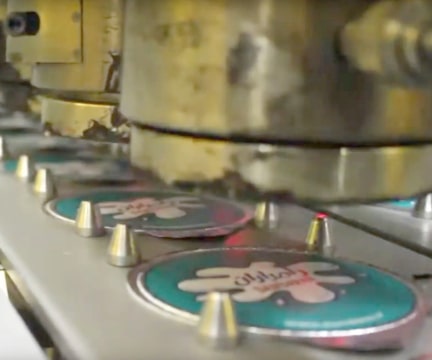
Plastic die-cut lids are composed of multi-layer plastic, like flexible packaging film rollstock. Polyester (PET) plastic is the most typically used plastic for die-cut lidding.
Paper die-cut lidding
Paper die-cut lids are made from a combination of paper-laminated aluminum and plastic film.
Plastic lidding film advantages versus foil lidding:
Foil lidding has exceptional built-in barrier properties, but plastic-only lidding films have distinct and attractive benefits.
Here are some of the benefits of using multi-layer plastic lidding films instead of die-cut foil lidding:
- Printing plastic film tends to be cheaper than printing die-cut foil
- Multi-layer films tend to be more technically challenging to make
- Plastic lidding film tends to be more tear and puncture resistant than foil
- Plastic lidding allows the use of metal detection to help ensure food safety
- Plastic lidding film tends to be more economical for higher volume production
- Mono-material or mono-polymer plastic packaging films are more easily recycled
- Tear and puncture-resistant lidding films reduce the need for caps or overcapping
- Thinner plastic lidding films means longer rolls which reduces lidding roll changeover frequency
- Mono-material film and cup combinations mean scrap plastic is reusable and has a practical market value
Peelability
What is peelability?
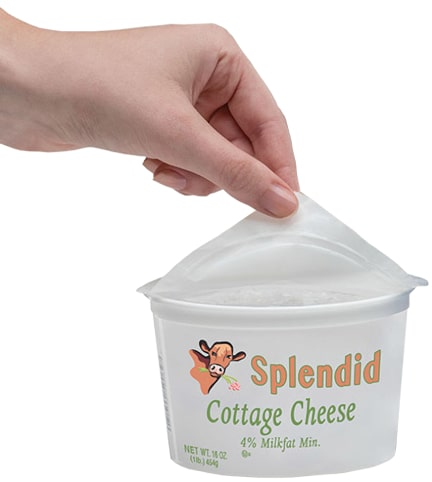
One of the most critical factors in choosing lidding heat seal layers for their performance is the peel seal or peelability desired in the packaged product. The lidding on single-use dairy packages is designed to peel away from cup rims without shredding or damaging the container.
Peelability requires matching the proper lidding seal layer to the cup's material, as well as a well-controlled seal initiation temperature
The peelable lidding design challenge
One of the key challenges of designing peelable lidding seals is that it needs to maintain its seal even as the packages move through the food supply chain.
General ways you can categorize lidding peelability or peel strength:
- Easy peel
- Medium to strong peel
- Very strong peel
Soft, spoonable dairy and related food products tend to be packaged with medium to strong peel strength. This level of peelability protects them during shipping and handling but provides practical ease of use for consumers.
Why is peelability important?
- It's consumer-friendly
- It provides evidence of tampering but is still easy to use
Peelability necessitates matching the lidding and heat seal layer to the container plastic and controlling the heat seal process. The ultimate result is a peelable seal that isn't too weak to fail and isn't welded and bother customers.
Sustainability recycling goals matter too
A recent issue affecting the design, production and use of lidding films is recyclability. As more manufacturers work to reduce their waste stream and increase their efficiency, market pressures increase the demand for recyclable lidding film solutions.
A growing trend in consumer-packaged dairy products is a mono-plastic, mono-polymer or mono-material lidding film and cup combination.
What is mono-material packaging?
It is important to note that increasingly soft and spoonable dairy packaged products use mono-material or mono-polymer flexible plastic lidding films. Mono-material films are films where all the layers of the lidding film are the same plastic-type as the cups they are sealing. This use of mono-materials makes the packaging easier to recycle. Easier to recycle means the cup and lid are recycle-ready for existing single-stream recycling.
What is single-stream recycling?
Mono-material rigid plastic and lidding combinations fit more readily into single-stream recycling systems. Single-stream recycling is a simple recyclable material collection process.
Single-stream recycling allows consumers to use one container to collect and recyclable materials. It makes recycling collection much simpler and more manageable.
Summing it all up
Processing soft dairy and spoonable foods require choosing the right lidding and rigid container materials. In addition, food safety and quality require sturdy, protective seals between the lidding and the cup rims.
All of this comes together during the heat seal process. Optimizing tool design, control and sealing parameters provides consistent seals. The results are lower, predictable production costs and minimal scrap while maintaining production line speeds.
Get a copy of our United Silicone Product Overview >>
Selected Reference Resources
- Analysis of Peelable Film in Food Packaging by Matt Baker >>
- Blown Film | Which Applications Are Most Suited for 7/9/11 Layers? Part 3 at PFFC, Paper, Film and Foil Converter >>
- ClearBags Barrier Packaging Explained at ClearBags >>
- Converters (Industry) at Wikipedia >>
- FDA Compliant, Food Grade and Food Safe blog post from ISM >>
- Flexible Laminates Within the Circular Economy by Ulphard Thoden van Velzen, Lisanne de Weert and Karin Molenveld >>
- Heat Sealing Considerations for Sterile Barrier Systems at DuPont™ Tyvek® >>
- Identification of polybutene-1 (PB-1) in easy peel polymer structures at Science Direct >>
- Medical Packaging: A Comparison of Heat Seal Coating and Peelable Film Technologies at MDDI, Medical Device and Diagnostic Industry >>
- Multi-layered packaging at Wikipedia >>
- Sealing Technology: The Overlooked Backbone of a Successful Production Line at Food Manufacturing >>
- Toray Plastics (America) Launches Lumilid® White Lidding Film for Refrigerated and Frozen Dairy Foods >>
Our blog post series about heat sealing packaging for soft dairy and spoonable foods
- Soft Dairy and Spoonable Foods Heat Seal Overview >>
Learn what it takes to package ready-to-eat soft dairy and spoonable foods in plastic cups with secure, attractive and easily peelable lidding. Rigid plastic containers with heat-sealed flexible lidding require thoughtful design and optimized processing.
- Heat Seal Lidding Materials for Soft Dairy and Spoonable Foods >>
Find out about the material decisions behind peelable soft dairy lidding. Fresh foods in rigid packaging need to be protected yet easy to access. Get a better understanding of how different lidding layers work together to protect the food inside.
- Soft Dairy and Spoonable Foods Lidding Sealing Challenges >>
Get consistently better and safer lidding seals by knowing more about the challenges. The best outcomes start with optimized tooling and sealing control.
Take Advantage of Our Expertise
We offer a line of ideas, so if you don't see it - ask for it. Let us turn your ideas for pneumatic or fluidic circuitry assemblies into reality — from conception to finished product.