
Plastic Tubing Sizes: How to Measure and What to Consider
You’re operating a pneumatic system. You’ve got pressurized air flowing through branching tubes connected by push-to-connect fittings. Everything is running like clockwork…until it’s not. Your failure to isolate a slow leak has led to pressure drops in your system, negatively impacting performance and costing you money. Eventually, you discover the culprit: a piece of plastic tubing just a hair too small in diameter.
What might feel like a minor miscalculation can lead to major consequences, regardless of the industry. And even if a section of tubing seems like it fits "well-enough" when first installed, it might not under the literal pressure of compressed air or hydraulic fluid, especially over time. Precise measurement is paramount when it comes to your system’s safety, functionality, and efficiency.
Now that we’ve sufficiently stressed you out, let’s talk about how you can make sure you’ve chosen the right size plastic tubing for your system. In this guide, we’ll talk about what measurements you should care about and why, what other factors should be taken into consideration, and how to measure tubing for accuracy.
Understanding Plastic Tubing Dimensions

It’s not all about the diameter. Plastic tubing can be measured in a variety of ways, some of which are extremely significant, depending on your use case. Let’s explore what these measurements mean and when they’re important.
Outer Diameter (OD)
Look down the length of any tube and consider the space from the outside of one side to the outside of the other (Figure A.1). This is the outer diameter (OD) because it measures the diameter when including the outer wall of the tube.
Many fittings, including push-to-connect and compression fittings, need to be compatible with your OD, because they involve fastening to the outside of the tube to create a seal. Clamps also care about OD for this same reason. Tubes that are too small may disconnect, but tubes that are too large (but still small enough to connect) can be more insidious, leading to the issue described at the start of this article.
Inner Diameter (ID)
Look down the length of the same tube, but this time pay attention to the inside wall on either side (Figure A.2). This is your inner diameter (ID) because it leaves out the tubing wall itself and focuses instead on the actual space inside.
This is the space your fluid (be it gaseous or liquid) flows through, making ID a particularly important factor when considering flow rates. Smaller IDs restrict flow, increasing pressure, while larger IDs have the opposite effect. They are also an important factor for barbed fittings, which rely on pressure from the tube to form an appropriately tight seal.
As flow rate can impact system performance, it’s important that you keep fluids flowing appropriately. When flow drops, so does pressure, which can lead to the same sort of performance issues detailed in the intro. If flow rate increases too much, pressure builds and can cause significant damage and safety concerns when it reaches a critical point.
Wall Thickness
Take your OD, subtract your ID, then divide the result by 2 (Figure A.3). This measures the thickness of the tube wall, which is critical for balancing flexibility and strength. It’s also a good indicator kink resistance or susceptibility, as thicker walls are less likely to kink (bend sharply) or collapse. That said, thicker walls are also stiffer, which can be problematic in tighter spaces or when some slack or flexibility is called for.
Scenario: Low Flow Gas – You’re delivering a precise trickle of gas to a sensor in a compact enclosure. Choose tubing with a small OD to fit the space and a thin wall to keep the inner diameter small to restrict flow, thereby making it easier to maintain more flow control. For example, 1/16" OD tubing with a thin wall in a rigid material like nylon ensures stable, low-volume delivery.
Tubing Length and Weight
We put these two together because they tend to play off of each other quite a bit. Longer sections of tubing will weigh more. Tubes that are already heavy are more prone to putting too much pressure on fittings at greater lengths. And they don’t just compound with each other. You might think you’ve found the right ID, OD, and wall thickness for your use case, including fitting compatibility and flow rate, but your chosen length of tubing may have other plans.
For example, let’s say you’ve chosen flexible tubing with a wider ID to allow for more flow in a low-pressure system. The ID is within parameters for the hose barb fittings you have and compatible with the fluid you’ll be sending through it. However, the nature of your system requires the tube to be at least a certain length. At that length, the tube sags, reducing flow rate, and kinks, cutting off flow occasionally only to allow little surges through.
Now let’s assume you solve the issue of sagging with much thicker and unyielding material. You feel confident because the diameter is still right for your fitting and flow rate. However, the sturdier tubing is also significantly heavier and at that length starts to put pressure and wear on your fittings, eventually damaging the fittings, the tubing, or both.
Here we see that choosing the right size for your tubing is not a checklist but a balancing act where you weigh the pros and cons at each stage, considering how each new measurement might affect the tube’s behavior and efficacy.
Considerations for Choosing a Plastic Tubing Size
The right tubing is essential not only for ease of use and machine efficiency, but also for safety. A pressurized system with the wrong size tubing can lead to bursts where tubing breaks or violently detaches from the system, which in turn can seriously damage the system and injure individuals present. This is especially true in air, gas, and chemical lines.
If you’re going to do this right, you have to consider more than just the flow rate and fitting compatibility, beginning with your core use case and what you absolutely MUST have for it to work.
Fitting Compatibility
We’ve already covered this in some detail above, but it’s worth mentioning again as it is essential that your tubing and your fittings match. Fitting types go beyond just the push-to-connect, compression, and hose barb fittings described above.
Luer fittings are designed for small plastic tubing and therefore particularly well suited to medical and laboratory settings. You may also come across threaded fittings, which can be used with plastic tubing (sort of). Threaded fittings connect tubing to other components, but the threaded part is not the part adhering to your tube. It will likely have a host barb or push-to-connect fitting on the other side.
Scenario: Fitting Compatibility and a Tight Spot – You're running compressed air to a benchtop device using 1/4" hose barb fittings, and you need a secure, leak-free seal without clamps. The setup is in a tight corner, and you need the tubing to be flexible but durable. Consider 1/4" ID plastic tubing made from flexible plastic like polyurethane or polyethylene.
Operating Pressure
You can break this down into working pressure (the amount of pressure your system can safely handle) and burst pressure (the amount of pressure your system can handle before catastrophic failure). Know how much pressure your system needs to work and how much is too much.
Higher pressure systems tend to demand thicker tubing or thinner tubing with reinforced walls. Smaller IDs are also more apt to withstand high pressure systems, but it’s all relative. Thankfully, you don’t have to guess. Tubing suppliers should include information about working psi and burst psi for the tubing itself. That said, you should give yourself a little buffer where burst psi is concerned. That’s not the realistic upper limit; that’s a goal you don’t want to hit.
Operating Temperature
Some use cases require temperatures within a certain range or may result in temperatures being within a certain range either in the broader environment or in the fluid itself. Extreme temperatures will affect tubing, so consider the environment in which that tubing will do its job. Put simply, high heat leads to expansion and softening. Cold temperatures cause brittleness and cracking.
You can avoid this by choosing tubing materials well-suited to the environment or fluid in question, as some are more susceptible to certain temperatures than others. However, you should also consider the wall thickness of your tubing. The reality is that thicker tubing is going to fair better in either case most of the time. It’s less prone to expansion and warping, but it’s also stronger and less likely to break under extreme cold. As with operating pressure, tubing specifications should list temperature tolerance.
Scenario: Hot Water Sterilization Line - You're running hot water through a sterilization line that reaches 180°F. You need tubing that won't soften, kink, or slip off under sustained heat. Choose plastic tubing with thicker walls and made from a high-temperature-resistant material like silicone. A 3/8" ID with thicker walls will maintain structural integrity and stay securely connected.
Fluid Type and Chemical Compatibility
The gaseous or liquid fluid flowing through your system is one of the most important determining factors when it comes to choosing tubing size. Fluid temperature, thickness, and chemical composition can impact everything from flow rate and pressure to required materials.
Start by making sure your tubing material is compatible with the fluid. In other words, the fluid won’t corrode the tubing and the tubing won’t contaminate the fluid. This is especially important in medical and food-based use cases. Then base your tubing size around the properties of the available materials. Some materials are more flexible than others even at the same size and thickness. For example, PVC may be snugger and less yielding than PTFE of the same or similar size.
Finally, consider the consistency of the fluid. Compressed air should move relatively easily but thicker liquids may need wider tubing for easier flow.
Application Conditions
Outside of room temperature, there are other environmental factors that could impact your tubing. Systems required to be set in smaller spaces, for instance, may need small or more flexible tubing. Systems that see a lot of vibration during operation could jiggle tubing loose from their fittings, especially if your tubing is particularly rigid. Other considerations include external abrasion, UV exposure, and temperature cycling, all of which may dictate the material you choose (and by extension your sizing options).
Regulatory or Industry Standards
Some industries, like food and beverage and medical device manufacturing, have specific requirements for components, including material and dimension standards for tubing. Make sure you understand what standards apply to your use case.
How to Measure Plastic Tubing
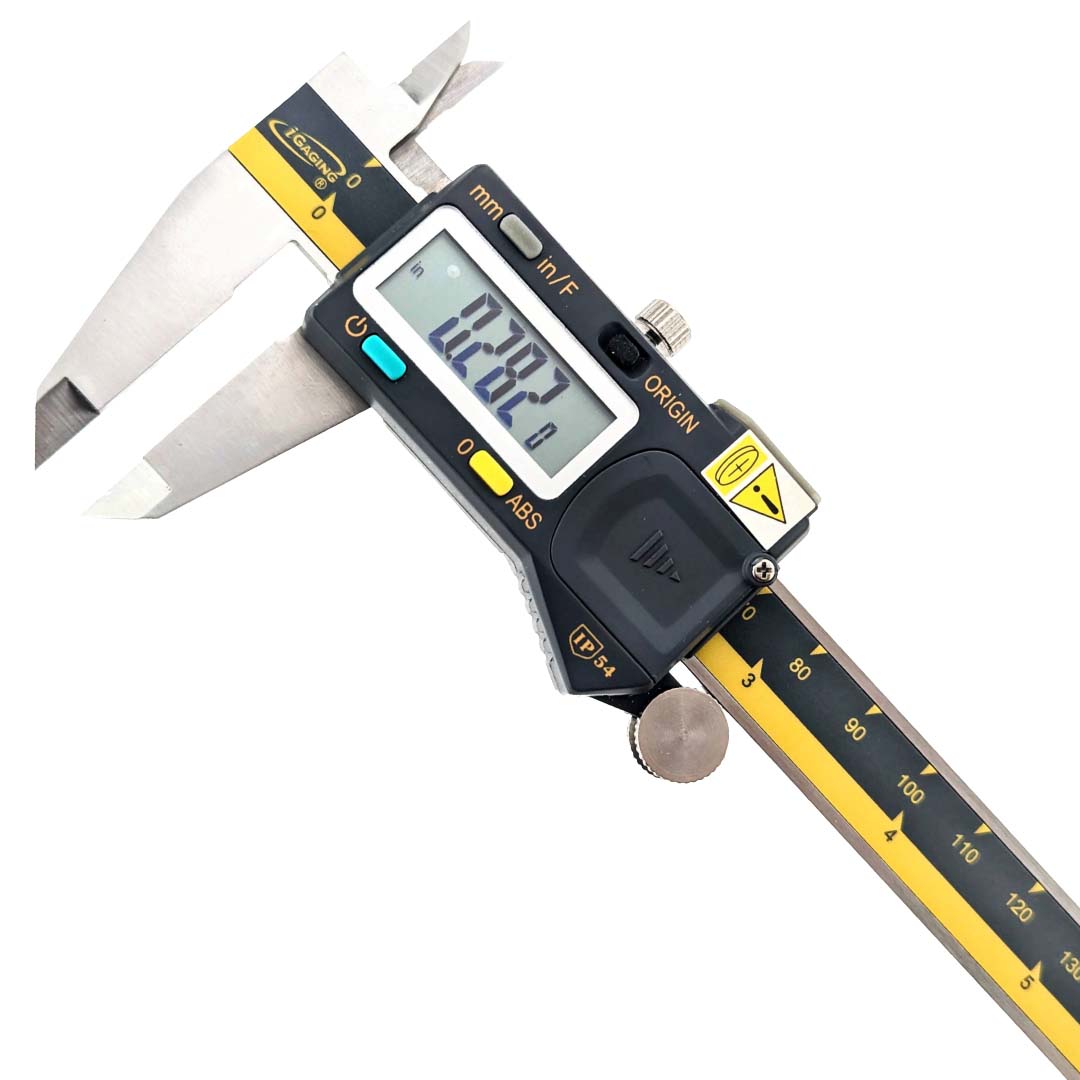
Manufacturers should have sizing guides for their tubing options, in which case any distributors for those manufacturers will likely have them as well. If you have a tube and you’re trying to figure out what size it is, find out who made it and reference one of these guides.
Consider using a set of calipers. This multitool ruler with specific appendages is designed for measuring OD, ID, and wall thickness. However, it is larger and while it can be used with plastic tubing, it risks warping or tearing the tubing in the process. It is also more likely to compress thinner tubing, which can distort the readings if not the tube.
Scenario: Can’t Find the Right Tubing - You need a new length of tubing to replace one that was damaged in your air filtration line. You’ve got some lying around but after measuring, you realize it won’t quite fit the bill. Now you are looking for 5/16" pneumatic tubing in OD but you can’t find that exact size in a plastic flexible enough to work with your push-to-connect fittings. So, you reach out to ISM.
Talk With an Expert
Of course, twin elephants in the room that we’re not addressing are cost and logistics, the former of which varies with tubing of different materials and sizes. Naturally, you can’t only be focused on this. Safety, regulations, and the health of your machine are essential. But there could still be places where you can make choices that favor your bottom line, especially in cases where similar tubing options from different manufacturers sport different price tags. However, you’re also likely looking for other components to round out your pneumatic system. Where will you find them? How many different manufacturers will you need to source?
Find the part you’re looking for without having to query a dozen different vendors for their parts and pricing. ISM is your partner in flow control components and can help you find the right size tubing from a range of suppliers, as well as any filters, valves, or fittings you might need. And if having everything all in one place weren’t enough, we also offer custom fitting and assembly for your unique tubing needs.

Take Advantage of Our Expertise
We offer a line of ideas, so if you don't see it - ask for it. Let us turn your ideas for pneumatic or fluidic circuitry assemblies into reality — from conception to finished product.